Showing posts with label guardians of biodiversity. Show all posts

Thursday, November 1, 2012

Bio { Cultural } Diversity on Scoop.it


Bio { Cultural } Diversity is the new site I set up this week at Scoop.it as Ive been running out of time to blog all the excellent articles Ive been finding. Scoop-it is not unlike Pinterest in terms of the simplicity of saving something to archive or share.

Back on the agenda as the year narrows towards the close is the book I have been wanting to write ever since I returned from the UK Research Trip last November. In 2010 I put together a self-published title called 'homage to the seed' in time for the end of year exhibition on conclusion of the Brisbane Botanic Gardens Residency. 68 pages in all it was rather speedily assembled. That this slim publication brought positive responses and led to some wonderful opportunities I certainly didn't expect.

It always seemed the there'd be another book...  still I made a promise to myself to not even think of doing it in that maddeningly brief time-frame of 6 weeks the first book had. I plan to allow all the necessary stages to be fully addressed and checked over.

Too much time can present a very different kind of problem but stalling the book project, commenced in early August, whilst in Cairns on Residency Sept?Oct provided thinking space and new input which found me settling on the original idea for the book...only this time round ideas were a lot more fleshed out and the sense of how to proceed as well.


                      Read the post on the Residency Exhibition here at the Studio archives blog.

Scoop-it seems to be an increasingly popular vehicle for storing dense articles on Plant Science, Biodiversity and other finds.


Examples of rescooped articles on my Scoop.it site:


 Rescoop

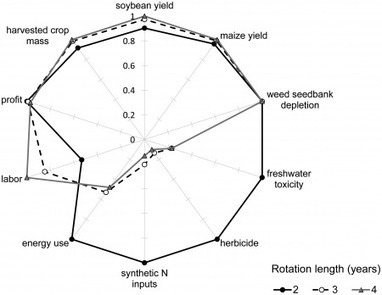
Benefits of agricultural biodiversity explored

 Two recent papers — one a report of a long-term experiment, the other a literature review — point to the benefits of diversity in agricultural systems.

Via Luigi Guarino


 Rescoop

Armenia and Georgia (2013): International Symposium on Fruit Culture and its Traditional Knowledge along Silk Road Countries

 http://www.ishs.org/news - International Society for Horticultural Science (One of more interesting titles >> International Symposium on Fruit Culture & its Traditional Knowledge along Silk Road http://t.co/04gKiHop...)...

Via Luigi Guarino


Scooped by Homage to the Seed
 Rescoop

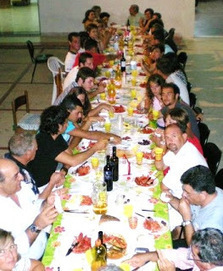
Sicily: Cuisine, Culture and Tradition: The Art of Eating Well In Sicily: Anatomy of a Meal

 Sicily: Cuisine, Culture and Tradition: The Art of Eating Well In Sicily: Anatomy of a Meal.


This link below is from Kew.org...  a 5 minute video on the fact a fifth of all plant species are under threat... with Dr Stephen Hopper, outgoing director of Kew Gardens.

Rescooped by Homage to the Seed from Plant Science
 Rescoop

Plants need a 'new deal' to stem their decline, warns Kew director

The economic and environmental benefits of plants must not be overlooked, says the outgoing director of Kew Gardens.

Via Rob Dawson, Ruth Bastow

Now to sign off with some Pinterest pins...


sophie munns artworks

103 pins


Photo of a pinPhoto of a pinPhoto of a pinPhoto of a pin


seeds, pods, capsules

466 pins


Photo of a pinPhoto of a pinPhoto of a pinPhoto of a pin


Its been fascinating to find how dimensional one's online community can be at the various sites ... some certainly show up at several different sites.

I must also acknowledge any followers who've joined in here and I've missed saying hello!

Sunday, February 12, 2012

Russia’s promises to the world, Part 1


This share comes from an excellent new blog I found via twitter last night. Well worth a hop over there to read much more from VAVIBLOG. But here's a taste...

vavilov3.jpg
Nikolai Vavilov

Russia’s promises to the world, Part 1

by JEREMY on APRIL 5, 2011 · 0 COMMENTS
The Director of the Vavilov Institute, Nikolay Dzyubenko, reminded participants at last week’sberry meeting that the Russian Federation had made firm commitments to share its genetic resources with the world. He mentioned two recent statements by political leaders, and thanks to the good offices of Sergey Alexanian, Vice Director for International Relations at the Vavilov Institute, we can share them here.
4110457440 bfc89e3baf mSpeaking at the World Summit on Food Security at FAO headquarters in Rome in November 2009, the Minister of Agriculture Yelena Skrynnik said: “Russia supports the collective efforts of the world community in their struggle against hunger, and … As an explicit contribution to the solution of this task, Russia is ready to commence the procedure of incorporating the renowned unique global plant genetic resources collection of the Vavilov Institute into the system of the International Treaty on Plant Genetic Resources for Food and Agriculture.”
Not too sure how that’s going.
Photo Copyright FAO.
Ive written about Vavilov before ... these notes are from Wiki:
Nikolai Vavilov

Nikolai Vavilov
BornNovember 25 [O.S. November 13]1887
Moscow, Russian Empire
DiedJanuary 26, 1943 (age 55)
Saratov, RSFSR, Soviet Union
NationalityRussian
FieldsBotany
Genetics
Nikolai Ivanovich Vavilov (Russian: Никола́й Ива́нович Вави́лов) (November 25 [O.S. November 13] 1887 – January 26, 1943) was a prominent Russian and Soviet botanist and geneticist best known for having identified the centres of origin of cultivated plants. He devoted his life to the study and improvement ofwheat, corn, and other cereal crops that sustain the global population.
Known for
Centres of origin

Tuesday, May 31, 2011

Would you lock the gate if they came for your town?

Here's a u-tube video from the town of Acland that didn't manage to lock the gates in time .... I wrote "up the road from where I live" about that story.


This poignant video shows Acland on Anzac Day this year... the town no longer operational. If thats not sobering... bear a thought for the great many towns in this region and beyond facing the same demise! And the land, farms and natural habitat, the water tables and riverways.


 I'm going up the road soon for this exhibition of Nicki Law's textile art. She's been told her farm is at risk... and so it is a very close to home story for her. In 2011 being a guardian for biodiversity has become extremely personal for many... people who were once at loggerheads are now joining forces as the fight grows louder between those wanting guardianship on land and water use and Govt allocations to Big Industry.


Nicki's exhibition runs five weeks... so if you live in the region please google for more info... I'll find links and pop back when I can!


Saturday, May 14, 2011

BIODIVERSITY HOTSPOTS: South-West Australia and around the globe.


© Densey Clyne/Auscape
Nearly 80 percent of the plant species in Southwest Australia are found no where else in the world, 
including many of the brightly-colored members of the genus Banksia. Banksia coccinea is pictured here.


Last year I read a great deal about the South West corner of this continent... It made me very keen to go and see for myself some of what I was reading... like the fact that 80% of species are said to be found nowhere else in the world. I came across a wonderful book called 'Australian Seeds' which I posted on last year... and so many threads worth following up on. 
When researching on this Australian Biodiversity hotspot today I found this overview at Conservation International.


The forest, woodlands, shrublands, and heath of Southwest Australia are characterized by high endemism among plants and reptiles. Its unique vertebrate species include the numbat, honey possum, and the red-capped parrot. The western swamp turtle, which hibernates for nearly eight months of the year in response to dry conditions and hot temperatures, may be the most threatened freshwater turtle species in the world, although a successful conservation program has allowed its numbers to increase. The primary cause of habitat loss in Southwest Australia has been agricultural expansion, which is accentuated by extensive fertilizer use. A major threat for the native fauna has been the introduction of ivasive alien species like foxes and cats.


Hotspot Original Extent (km 2)356,717
Hotspot Vegetation Remaining (km 2)107,015
Endemic Plant Species2,948
Endemic Threatened Birds3
Endemic Threatened Mammals6
Endemic Threatened Amphibians3
Extinct Species†2
Human Population Density (people/km 2)5
Area Protected (km 2)38,379
Area Protected (km 2) in Categories I-IV*38,258
†Recorded extinctions since 1500. *Categories I-IV afford higher levels of protection.
OVERVIEW


The Southwest Australia Hotspot occupies some 356,717 km² on the southwestern tip of Australia, in the state of Western Australia. As defined, this hotspot comprises the Southwest Botanical Province, but excludes the neighboring Southwestern Interzone. As this hotspot is one of five Mediterranean-type ecosystems in the world, most rain falls during the winter months and the summers are characteristically dry. A broad coastal plain 20-120 kilometers wide grades into gently undulating uplands, with weathered granite, gneiss and lateritic formations. Further inland, rainfall decreases and the length of the dry season increases.

Native plants are well adapted to the nutrient-poor sandy and lateritic soils, which also support broadacre cropping and sheep grazing. Vegetation in the province is mainly woody, comprising forests, woodlands, shrublands, and heaths, but no grasslands. Principal vegetation types in this region are Eucalyptus woodlands, and the Eucalyptus-dominated “mallee” shrubland. Kwongan is a term adapted from the Aboriginal Noongar language to cover the various Western Australian types of shrubland, comparable with the maquis, chaparral, and fynbos of other countries with Mediterranean-type systems. The principal structural types of Kwongan are thicket, scrub-heath, and heath, which together comprise about 30 percent of the original vegetation. A number of vegetation units are endemic, including some types of eucalyptus forests and some forms of kwongan.

The Southwest Australia Hotspot occupies some 356,717 km² on the southwestern tip of Australia, in the state of Western Australia. As defined, this hotspot comprises the Southwest Botanical Province, but excludes the neighboring Southwestern Interzone. As this hotspot is one of five Mediterranean-type ecosystems in the world, most rain falls during the winter months and the summers are characteristically dry. A broad coastal plain 20-120 kilometers wide grades into gently undulating uplands, with weathered granite, gneiss and lateritic formations. Further inland, rainfall decreases and the length of the dry season increases. Native plants are well adapted to the nutrient-poor sandy and lateritic soils, which also support broadacre cropping and sheep grazing. Vegetation in the province is mainly woody, comprising forests, woodlands, shrublands, and heaths, but no grasslands. Principal vegetation types in this region are woodlands, and the -dominated “mallee” shrubland. is a term adapted from the Aboriginal Noongar language to cover the various Western Australian types of shrubland, comparable with the maquis, chaparral, and fynbos of other countries with Mediterranean-type systems. The principal structural types of Kwongan are thicket, scrub-heath, and heath, which together comprise about 30 percent of the original vegetation. A number of vegetation units are endemic, including some types of eucalyptus forests and some forms of kwongan.
Overview | Unique Biodiversity | Human Impacts | Conservation Action


Home to majestic trees that seem to stretch forever
and wildlife such as kangaroos, the South West region
 is popular with nature enthusiasts including hikers.

 Map from ANU E Press article: ‘Plants That Perform For You’?
From Floral Aesthetics to Floraesthesis in the Southwest of Western Australia
John C. Ryan

Gregory Pryor - BLACK SOLANDER:  Black Solander was an attempt to take a snapshot of the entire census of Western Australian plants. The biodiversity hot spot of Western Australia (particularly the south-west) hosts over 12,000 species (and still counting). The systematic identification of these plants simultaneously achieves two things: It continually expands the number of new species found in this remarkable region of the world and at the same time catalogues the rapid demise of other species through various man made causes. This exhibition proposes the idea of a herbarium as a mausoleum. Instead of specimens however,  10,500  small ink drawings were painted from the dead plants in the Western Australian Herbarium. And contrary to the traditional practice of botanical illustration, the use of black ink on black sugar paper  blurred specificity and suggested a more shadowy archive. The artist  faithfully echoed all elements of a specimen sheet: naming, dating, mounting devices, collection stamps and the dark, ghostly silhouette of the plant. Through this process the plants were reinvented, and the collection was reborn in another context.

Black Solander installation shot
Black solander, 2005, ink, graphite and spirit based ink on sugar paper.
                                                                       Pryor is represented by Lister Gallery


Greg Pryor
Gregory Pryor: Black Solander, 2005

Read more here:

Black Death: Species Extinction in WA

Author & Artist: Mr Gregory Pryor, feature


THE BIODIVERSITY HOTSPOTS - THE following text is from the Australian Government Department of Sustainability,  Environment,  Water,  population  and communities.
Read more here.

What is an international biodiversity hotspot and how were they identified?

Conservation International, a nonprofit environmental organisation based in Washington DC, has identified 25 international biodiversity hotspots, including the southwest of Australia.
These international hotspot areas were assessed according to their plant diversity, and had to contain at least 1500 endemic plant species to qualify. All of the regions identified had lost more than 70% of their original habitat.

Where are the international biodiversity hotspots?

25 international biodiversity hotspots have been identified. Hotspots have been identified in:
  • North and Central America (3 hotspots)
  • South America (5 hotspots)
  • Europe and Central Asia (2 hotspots)
  • Africa (5 hotspots)
  • Mainland Asia (3 hotspots)
  • Asia-Pacific (7 hotspots - including Southwest Australia)


Related Posts Plugin for WordPress, Blogger...