Showing posts with label regeneration. Show all posts

Sunday, March 31, 2013

The Inspiration Garden, Morningside , Brisbane

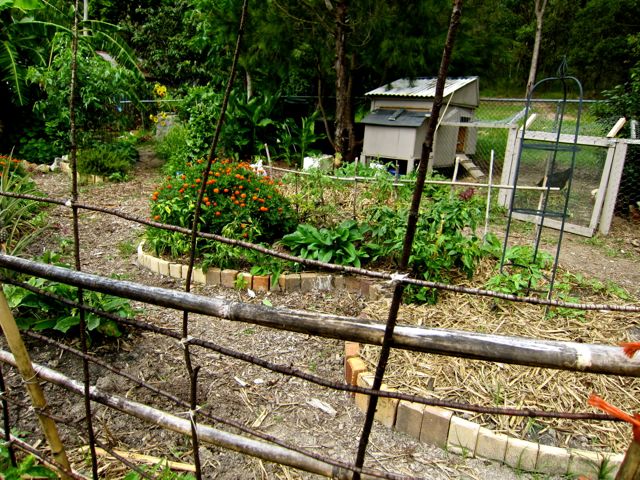
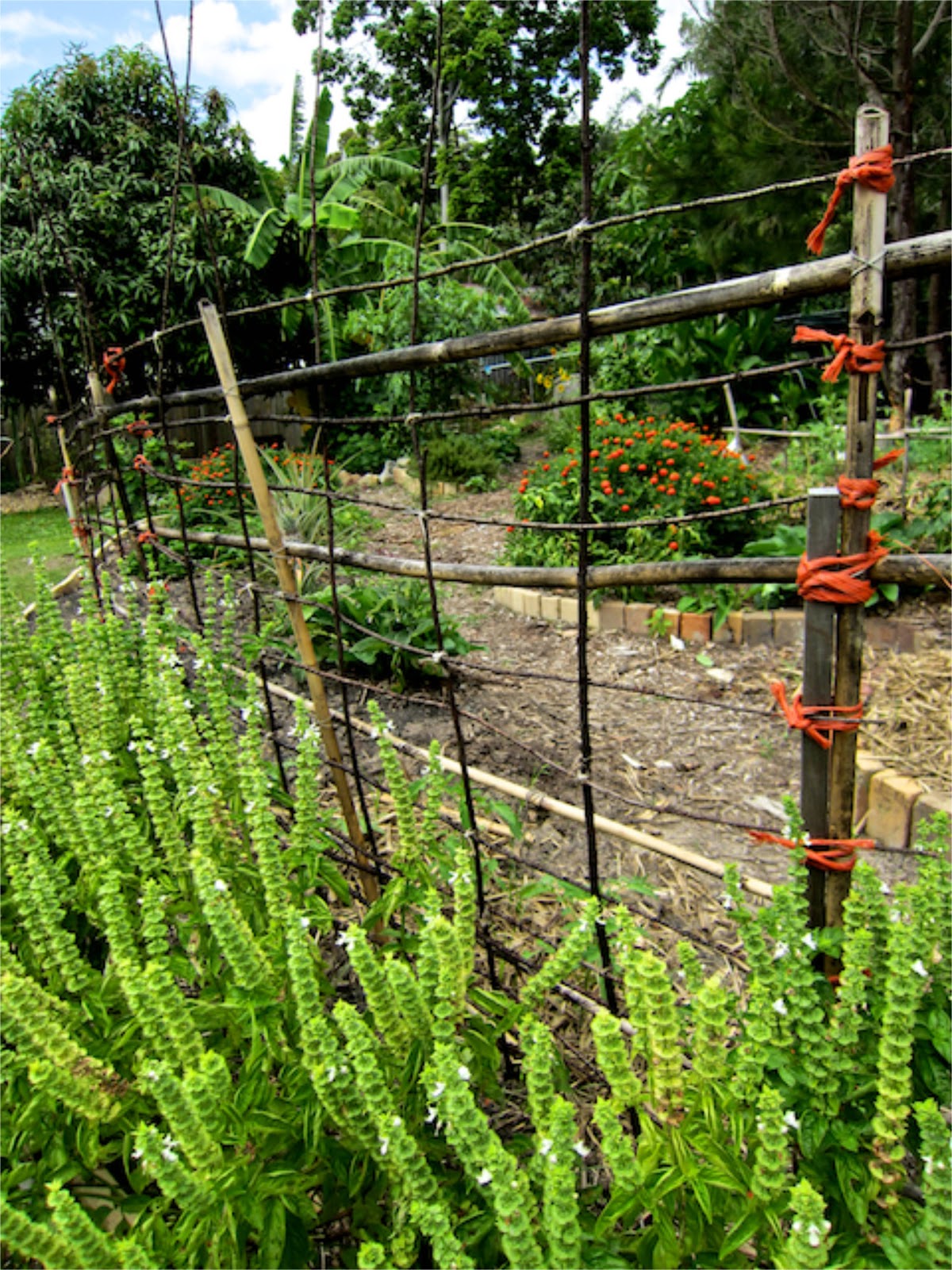
Yesterday I spent the morning in this wonderful garden set up by Andrew and Nancy Kent. 


I added an album on my Facebook page here!
  
Great story on the Inspiration garden at a growing venture: EDIBLE YARDS


Nancy was one of the speakers at the recent Biodiversity Dialogue events I held in conjunction with my February Exhibition. She gave a short talk on the project and how it is set up to include community and function over time.


Flyer for Biodiversity Dialogue event


The Inspiration Garden
Blog banner and contact details.
More here: BLOG

Nancy: left standing and right working: images Edible Yards


Text from EDIBLE YARDS POST:

The Inspiration Garden is a neighbourhood permaculture garden situated near the Seven Hills bushland, Brisbane. The Inspiration Garden began when Nancy and Andrew Kent decided to take a small step towards a more sustainable lifestyle by creating a place where all are welcome to make friends and learn about sustainable lifestyle and permaculture.
The garden is now well established with a great following of volunteers supporting, growing and developing the garden, with over 600 people paying a visit to the garden since it’s creation in October 2010.
Nancy Says “Our volunteering program is unique as each volunteer works one on one beside an experienced gardener. We tailor the volunteering session to the needs of the volunteer. There is always so much to do around the garden that there is a wide variety of activities to choose from. If it is raining we do indoor activities like seed saving and packaging.”
Nancy holds educational courses and workshop sessions which include organic gardening and soil creation, what weeds and pests are saying to us, sustainable eco gardening, how to grow food in pots, Awakening the Dreamer Symposiums, film evenings, neighbourhood garden cook ups and Inspiring the Heart reflection sessions.


All are invited to contact the gracious hosts of this venture to participate in workshops on offer or in volunteering and learning more about the project. Lateral thinkers that they are ... there are many ways community are able to benefit and contribute to the life if this project.

Our encouragement and support for such ventures is paid back in so many ways. I hope you find a chance to visit sometime if in this region. 

Thanks for a wonderful time Nancy and Andrew!

I'll be back soon!


Below: The Garden layout.   Read more at history link.


See you there!

Thursday, August 26, 2010

a quiet august...


This month started quietly with much needed time out after an extraordinarily busy few months - particularly with the Open Studio Week at the Botanic Gardens at Mt Coot-tha in mid July. You can read all about that in the July posts on this blog. Go to archives in the sidebar.


There were several excellent events held during Open Studio Week which I have yet to add a comprehensive post on. Above is Principal Seed Collector/Lab Technician Jason Halford spoke at length about the fascinating work he does in conjunction with the Millennium Seedbank Project. You can read various posts at this blog that elaborate on this work by clicking on his name above. Presently Jason is in Nth Queensland collecting species from the various regions he researched in the weeks before setting off. Once return from that trip those involved in seed cleaning will come to the Lab... and I shall look forward to seeing what has been collected and hearing stories from the north.


The Sunday Dialogue event brought together a range of topics and interesting speakers and participants. Shown above are Sally McCreath (Friends of Felton in the Darling Downs region) and Nicki Laws (from the Acland area of the Darling Downs). On the right is Corinne Unger who was a Churchill Fellow last year and gave an excellent presentation on her Fellowship work exploring key internationally recognised projects that have successfully rehabilitated old mine sites into sustainable future oriented projects such as the Eden Project in Cornwall, England. I wrote about the Darling Downs region here in May.

The following images are from the site Friends of Felton - They came to the city on August 4th to protest their concerns outside Parliament House. I was pleased to be able to come along for a while and say hello to Sally and others. These children made quite a statement - the yellow triangular signs - 'Save our food bowls' - very apt as the Darling Downs has long been known as the "food bowl" of Australia.


5/8/10. Hundreds of farmers and environmentalists gathered outside State Parliament in Brisbane yesterday to demand action to protect our farmland, our environment, and our communities from mining.
The protest was the lead story on the evening news bulletins of all 4 major TV channels.
Watch the video reports here -
Channel 10 (recommended!) Channel 9 Channel 7 ABC
PlaceStory (recommended)                   (From the FOF website)


During the Dialogue day on Seeds, Biodiversity and Sustainability at the studio Corinne's considerable experience with land regeneration in sensitive Mine rehabiliation work made for valuable exchange with Sally and Nicki, both living in the Darling Downs on rural properties in communities dealing with massive changes brought on by mining companies coming in. In the case of Acland - 95% of the town has been dismantled for mining in that area. The Felton community realised what it would take to delay or stop this happening in their region and mobilised to become a very articulate, well-planned voice in the fight to save their community.
Corinne gave quite an insight into the immensely challenging task of regenerating land - both from the point of view of land degradation, and unsatisfactory clean ups that can occur, as well as a picture of the precise work to get the soil ready, choose vegetation best suited to the area, plus the ideal plantings needed in order to establish regeneration that in time can be deemed successful.


Carolyn Nuttal (above) was also a speaker on this day and brought her extensive experience of creating gardens in schools to the discussion. In 1992 she set up a school garden in her local State Primary School where she was teaching. Over time, realising what a successful programme she had come up with, a book was written and  also published (and distributed) successfully in Japanese and Portuguese (for schools in Brazil). Carolyn is also involved with SUSTAIN QLD which I will refer to below.


On a different tangent August saw the move into the new studio I have been graciously offered to continue the Homage to the Seed work for the rest of the year. You can read about this Studio residency which is currently taking place at Percolator Gallery in Paddington via a recent post I wrote at the Studio blog. This excellent circumstance was set up and made possible by Helena Lloyd, owner of Brisbane's Percolator Gallery and I am indeed grateful to be the recipient of this very fine offer.... which is extremely timely and positive!


Despite calling August the "go-slow" month it has been far from that. Keeping a low profile is more the way to describe it... getting back into the studio for some uninterrupted hours has been vital and refreshing.... casting one's mind back over the year and then creating directions for the next months. Correspondences and connections have been caught up with and links to several interesting agendas made including an advocacy group still evolving called SUSTAIN QLD which looks at issues such as Food Security in this state. Attending a recent Dialogue event at the Brisbane City Library on Food in Schools was an great opportunity to learn more about what is happening across the community at State, regional and community level on this topic. With wide-ranging participation from across the health and education sectors, Food producers, and academic and grass roots layers... an important exchange took place amidst a room of passionate people....each with a strong, individual idea of what is needed for the future and it would seem the dedication to work towards that in the endeavors they are already involved with. An insirng group ...keen to find actions and pathways that lead to the most worthwhile results.

I was fortunate to meet people involved in the School Kitchen Garden programs  and I hope to go visit one or two of those schools soon. One of the schools has planned a trip to the Botanic gardens for tomorrow for 3 classes so a space is booked to do a "homage to the seed" presentation  to the various classes. Shall make sure to take a camera along!

So...August was quiet, but not that slow!! Sustaining connections  takes time... so worthwhile however when the conversation keeps growing and deepening - and the links keep intersecting and strengthening!

Monday, April 26, 2010

Denise Rivers volunteering in the Seed lab


Denise is among the more regular volunteers at the Seed Lab at the Botanic Gardens. For 6 years she has been volunteering with Greening Australia in a variety of roles - potting up in their nursery at The Gap or out seed collecting. Greening Australia is one of the partners in the locally based Seeds for Life project which is running in conjunction with the MSB project (Millennium Seedbank Project).
Bush regeneration and land care is something she has given much time to in recent years, aiding the ongoing effort to rid bush land of weeds, especially vines that strangle and kill off shrubs and trees as well as introduced species.
I've been in the lab on several ocassions with Denise and had wonderful conversations around this work she is involved in. I am thrilled to post her excellent photos that she has kindly emailed from her own personal collection with accompanying text from notes made to go with images.


The ground berry - Acrotriche  epacridaceae Denise says its particularly hard to pick this low lying bush without being scratched to bits. With a stick to lever up the branches with berries on them and gloves to save hands the berry is collected with great care. In an attempt to generate seeds for planting many methods have been tried - like soaking in boiling water, keeping in a dark room, soaking in a can of coke, leaving them to soak for 24 hours in water - even putting them in bird droppings with moisture and holding in a dark place. The Gap's native nursery finds refridgeration for 3 months is best so far - and perhaps easier!


Monkey Pop Vine or  Parsonsia straminea Our photographer thinks this would make a great hair piece or blonde wig. Working in the bush last year she had the pleasure of watching hundreds of clusters of these floating by. Note the seedpods are found on the end of the silky hairs. The monkey rope is the usual host plant for the Common Crow butterfly, and its caterpillar is called "Mr Curly"....reminiscent of Leunig for those who know this cartoonist! ... a charming story!


Sterculia quadrifida - the peanut tree is native in this region and edible, striking easily from seed and is also known to be fast growing. Interested in planting it? Its perfectly suited to this region but bear in mind it does grow to 18 metres! The pods are spectacular and the black seeds are the edible bit. Ive seen this and other local species at the Northey Street Farm in Brisbane - see website on the sidebar lower down!


Acacia mangium still in its pod (top photo) and separated (underneath). If you observe closely these have an amazing yellow cord - like an umbilical cord almost - linking black seeds to pods. It zig zags out if you carefully unravel it! Denise notes its very strong smell and says a mask is required for cleaning. She points out some acacia have a soft seed coat and are easy to release...others need hot water and prying open.


Tabernaemontana pandacaqui ( Banana Bush) The 3 to 16 red seeds contained in the pouch are poisonous and is said to be quite a sight when one manages to find this plant in fruit... rare as it is.


Castanospernum australe or Black bean is common and particularly loved by children for making boats and toys with - and by artists for their splendid tactile quality and interesting archetypal forms. Denise notes they germinate very easily but need to be fresh when planted.

With gratitude to Denise for kindly taking the time to supply these excellent images with text and for sharing her stories with us. Its an enormous contribution Denise and so many others like her are making in our communities, quietly, with so few seeing them hard at work.


Postscript: inspired by the sight of Denise's photo of the Monkey Pop Vine seeds the splendidly talented artist Altoon Sultan sent me several photos of Milkweed to share here. Based in Vermont, in the US Altoon delights those who visit her blog Studio and Garden with the interweaving of daily life between her studio and garden on an old hill farm. Once a native New Yorker Altoon has work in many public collections including the Met in New York and Tate Gallery, London.

About the first 2 images below Altoon wrote:

'I was returning from my midday walk on this brilliantly clear day and noticed that in the field alongside the barn, the milkweed silks were glittering like so many puffs of pure light. The pods were open, allowing the silk to blow in the light wind, its small seeds ready to scatter.'


Then in another post she adds:

'When i photographed milkweed a few days ago I didn't realise that the seeds in the pods pictured were immature. Yesterday I noticed that each of the larger seeds, a flat oval shape, had a circular gathering of tiny threads on its end. this lovely billowing form carries the seed on the wind.

Milkweed silk, I discovered, was used to fill jackets during World War II and is still used to fill some natural fibre pillows.'


Further:
'The milkweed pod pictured above was sitting on a windowsill in my kitchen; after a few days I noticed that the silk and seeds were billowing out of the pod. I went to touch it and, marvellously, all came flowing out, as in slow motion, enlarging and moving forth. It was amazing. And then I had the seeds floating all over the kitchen, not at all easy to gather.'   Read this post here.

With sincere thanks to Altoon Sultan for sharing this evocative imagery and writing!
Related Posts Plugin for WordPress, Blogger...