Showing posts with label food security. Show all posts

Sunday, February 12, 2012

Russia’s promises to the world, Part 1


This share comes from an excellent new blog I found via twitter last night. Well worth a hop over there to read much more from VAVIBLOG. But here's a taste...

vavilov3.jpg
Nikolai Vavilov

Russia’s promises to the world, Part 1

by JEREMY on APRIL 5, 2011 · 0 COMMENTS
The Director of the Vavilov Institute, Nikolay Dzyubenko, reminded participants at last week’sberry meeting that the Russian Federation had made firm commitments to share its genetic resources with the world. He mentioned two recent statements by political leaders, and thanks to the good offices of Sergey Alexanian, Vice Director for International Relations at the Vavilov Institute, we can share them here.
4110457440 bfc89e3baf mSpeaking at the World Summit on Food Security at FAO headquarters in Rome in November 2009, the Minister of Agriculture Yelena Skrynnik said: “Russia supports the collective efforts of the world community in their struggle against hunger, and … As an explicit contribution to the solution of this task, Russia is ready to commence the procedure of incorporating the renowned unique global plant genetic resources collection of the Vavilov Institute into the system of the International Treaty on Plant Genetic Resources for Food and Agriculture.”
Not too sure how that’s going.
Photo Copyright FAO.
Ive written about Vavilov before ... these notes are from Wiki:
Nikolai Vavilov

Nikolai Vavilov
BornNovember 25 [O.S. November 13]1887
Moscow, Russian Empire
DiedJanuary 26, 1943 (age 55)
Saratov, RSFSR, Soviet Union
NationalityRussian
FieldsBotany
Genetics
Nikolai Ivanovich Vavilov (Russian: Никола́й Ива́нович Вави́лов) (November 25 [O.S. November 13] 1887 – January 26, 1943) was a prominent Russian and Soviet botanist and geneticist best known for having identified the centres of origin of cultivated plants. He devoted his life to the study and improvement ofwheat, corn, and other cereal crops that sustain the global population.
Known for
Centres of origin

Friday, April 22, 2011

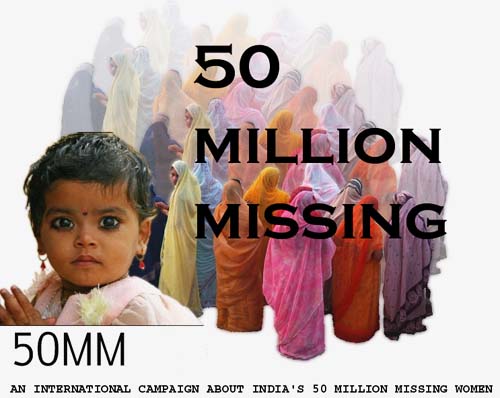
India, activism and a hoped-for plan!


Recently I visited the blog of Soraya Nulliah where I read her post:    
                                      Mother India...why are you killing your daughters?


(go here to read more about the genocide against India's girls)


I retweeted and reblogged her story on the 50 million Campaign. I explained to Soraya that I had plans to get to India if possible this or next year and had been in touch with the Earth University at Navdanya, near New Delhi... the enterprise set up by Dr Vandana Shiva whom I have posted on at this blog here and here... a world famous seed activist working on food sovereignty in India and around the planet. Winner of the Sydney Peace Prize she is an hugely important figurehead for empowerment of woman and men in her own country and beyond.


Navdanya means Nine Crops, which collectively represent India’s food security.
Navdanya started as a research programme at Research Foundation for science, Technology and Ecology (RFSTE) to help support and guide environment activists. The Punjab Violence made farming and agriculture a fairly violent industry and Navdanya was born out of this quest to find non violent means to farming, especially through the protection of biodiversity and small farmers.
Navdanya’s mission is to support local farmers, rescue and conserve crops and plants that are being pushed to extinction and make them available through direct marketing.
More info on www.navdanya.org and at this excellent brochure here.


(Music 1, mixed media on canvas, 16" x 20", NFS)


Soraya has posted an interview with Indian author and human rights activist Rita Banerji here in two parts - Part 1 and  Part 2.

'Rita Banerji is an author, free-lance writer and photographer and a gender activist from India. Her  Sex and Power: Defining History, Shaping Societies was published by Penguin Books in 2008.  She is also the founder and chief administrator of The 50 Million Missing Campaign which works to raise awareness about and fight female genocide in India.
Her writings and photography have been published in magazines and newspapers in the USA, U.K., India, Nepal, Hong Kong and Australia.  The publications include The London Magazine, New Orleans Review, and India Today.  She blogs at Rita’s Blog' TEXT: website

From my garden
photo by Banerji

I've taken an excerpt from Part 2 because of Rita Banerji's connection with Dr Shiva.


You worked with the Chipko women’s movement under Dr. Vandana Shiva. Did that experience shape you in any way? If so, how? Can you share with us why ecofeminsm works and how it empowers women? What was it like for you personally to work with Dr. Shiva?
I was introduced to Dr. Shiva by Dr. Leslie Lovett-Doust, who is an ecologist and was also my freshman advisor. So that’s how I ended up in India as a Charles Dana fellow to do a project with her. I really liked working with her – because she gave me ample freedom and scope for individual judgment which I always need for any work I do. She gave me a couple of projects to choose from, and from there on I was on my own. I’d report to her once a week, and we’d discuss what I was doing and if there was any problem with anything. 

I had to create a herbarium of the species of plants in a 1 km radius, to establish the biodiversity of the region, and do a general ecological survey of this subvalley called the Sisiyaru-khala valley (in the Doon Valley), where lime stone industrialists were strip mining the mountains. The locals helped me first classify the herbarium according to the folk system – which is entirely use based (like food, fuel, fodder, medicine etc.) And then I did a scientific (Linnaen) classification of it, and that herbarium was used as evidence in court. Two years later, I was in the U.S. when I got a letter from my friends in the village telling me that they had won the case against that particular quarry and it had been shut down! So that felt great. 

Yes, it did have a big impact on me. I was veering towards genetics at that point in combination with ecology. But with the Chipco, the implication of eco-diversity in context of people, culture and lifestyles hit me in a big way. So when I eventually entered my Ph.D. program it was actually in conservation biology (more macro instead of micro – so I had evolution and ecology instead of genetics as tools of dealing with diversity and conservation). 
The thing about Eco-feminism, as promoted by Dr. Shiva and many others is that it sees parallels between the productivity and the exploitation of women and natural resources by a virulently patriarchal society. And I think that as enthusiastic as I was about this at that time, as I grew older and got more into the field, my perspective on this has evolved. I think that communities like the one in Nahi-kala that are isolated, (they had no roads or running water), and are very dependent on their environment will naturally move to protect their environment because that’s survival for them. And yes, women do spend more time in the fields and forests, but in communities like this, and from my observation even in more urban, sophisticated settings there are men who are just as tuned in or connected to the ecological rhythms of nature. Conversely, there are just as many women in some rural and more so in urban settings who are not in tune with the ecological rhythms of nature. In the U.S., studying native American tribal philosophy on nature (the famous quote by Chief Seattle about teaching your children that we are connected to the web of life and what we do the earth we do to ourselves), I am convinced men can be just as connected. It is not a male/female thing. 


 Here's a post from Rita Baneriji's blog on a topic that speaks precisely to the politics of food sovereignty that Vandana Shiva has worked tirelessly to bring to global attention.

When Potato Cartels Kill

MARCH 26, 2010 BY RITA BANERJI 
A potato farmer, Maktabul Hussein, only 18 years old, committed suicide today in Jalpaiguri, in West Bengal.  Why? Because the price of potatoes have dropped so much that he could not make up the money to pay back the Rs. 500,000/- loans he had taken to cultivate his land.
Maktabul was getting only Rs. 1.80/kg for his potatoes.  And this is what is bizarre! Over the last few months everyone in town has been complaining about how the cost of potatoes has been soaring, along with that of onions, lentils and rice.  At one point potatoes was selling for Rs.20/kg! If the middle-class was feeling the pinch, just imagine how it has been for the poor.  Potato after all has been the poor’s sustenance! What more – recently the West Bengal government announced that there has been such a surplus of potatoes that they are going to be exporting them!
What are we supposed to gather from this? Is there a potato cartel at work here?  That odious middle-man?  Does he hoard the potatoes – and rips off the poor farmer who breaks his back cultivating it.  And then turns around rips off the customers by charging them 10 times the cost?
In the book Needless Hunger, the authors show that it was exactly this kind of food cartel that had resulted in Bangladesh’s famine, when hundreds died of starvation.
Talking biodiversity here's another post from the blog - click on title to go to blog post!

Why women in the Andes grew 4000 species of potatoes


Photo Credit: Association ANDES and Åsa Sonjasdotter.


I'll leave you with this to think on....


Founded by Dr Vindana Shiva:


Bija Vidyapeeth is Sanskrit for “Seed Learning Centre” with “bija” meaning 
literally “seed” as well as “origin” or “source.” The Bija Vidyapeeth seal also
 says “vasudhaiv kutumbakam” in Sanskrit. This means “one world family.”


Monday, February 28, 2011

The history of food took an ominous turn in 1991...!


The title of this post I took from an article written by Ellen Brown for www.webofdebt.com where she says:

"The history of food took an ominous turn in 1991, at a time when no one was paying much attention. That was the year Goldman Sachs decided our daily bread might make an excellent investment. . . .Robber barons, gold bugs, and financiers of every stripe had long dreamed of controlling all of something everybody needed or desired, then holding back the supply as demand drove up prices."  Read more here.

I found this image of the supermarket trolley below on a blog that was posting on food security in Barbados... and the writer was deeply disturbed at the lack of FS in his country. Its struck me that this image was a potent symbol of the common misconception of where food comes from. Backyard food growing efforts, as empowering, important and useful as they are, dont automatically lead people to think deeply about this topic. I would argue that our food security is a complex thing ... and you may want to see the film I recommend below to understand more on why increasing speculation on food commodities puts us globally so at risk. We are not separate and contained by our quarter acre blocks ( for those of who even have that or more!) Its no longer a case of "I'm OK Jack...  so long as Im fine!"

Higher rents and house prices already make life unbearable for many in this country and elsewhere. Hands up who's been affected. If you haven't you're lucky! The film I refer to shows that speculation and risk ventures on housing led directly to the problem we have now around the world in the housing sector ( and employment sector).
What I learnt from this film is that despite the fall out in 2008's GFC little has changed ... and in fact commodities now more than ever before are being gambled on in the way that housing was. 


symbol of food security for many!


"Shrink in the Kitchen" is a fascinating and engaging website/blog by Scott Haas based in Cambridge, Massachusetts : 

Scott Haas is the author of “Hearing Voices” (Dutton) and “Are We There Yet?” (Plume) and a co-author of “The Da Silvano Cookbook” (Bloomsbury).   He won a James Beard award in 2004 for his radio work.  His work appears in a variety of publications, including Wine Enthusiast, The Boston Globe, and Gastronomica.  He has a doctorate in clinical psychology and maintains an active consultative practice emphasizing diagnostic work.  


Before I share the article from the Shrink in the kitchen with you I want to explain something... I am one of millions who has little real comprehension of what derivatives and financial markets jargon is about. Mind you ... I could see the GFC looming... that whole thing that happened with Sub-prime housing had to give. '

In London in 1988 I had a job making and delivering sandwiches to several Japanese and other banking firms in The City monday to friday - 7 am till 11 am - before I went off to my next job. Working with a bunch of South Africans (who could not bear the closing years of apartheid and escaped to London) we would catch lifts with the lunch trolley and suited men talking strategies to the floors where guys on the phones to global stock-markets awaited their BLTs and Turkey with cranberry sangers.

the BLT
'
 My boss had scrambled to put together this little business after leaving a privileged lifestyle with her Iranian arms-dealing boyfriend - empty handed and desperate to get away. The crunch had come when his business interests became clear. When working for her we drove a toyota hi-ace... but she'd started with a lent Rolls... a friend who'd offered support. This was London 1988 ... a world away from my previous job in a remote Australian coastal village teaching Art. 
The word 'strategy' peppered every sentence spoken in those buildings. Something about that word sat with me uneasily.'


Last night I went to see the film  INSIDE JOB.  Curiously the peculiar sensation I'd had around that massively over-used word "strategy" in 1988, London was laid out for us all to examine in Charles Ferguson's  film narrated by Mat Damon. Made on location in the US, England, France, Singapore, China  and opening in Iceland the film had me perched on alert, eyes and ears open for the entire time it rolled. Not only was it dense and demanding but it actually succeeded brilliantly in keeping one's level of interest high throughout. Dinner conversation later was very animated ... each of us unanimous in our agreement that the filmmaker had seriously delivered a remarkable documentary.


The website for this film is resourceful... click jargon to read more like this:

Derivatives: 
a derivative is an agreement between two parties that is contingent on a future outcome. In finance, a derivative is a financial contract with a value linked to the expected future price movements of the asset it is linked to - such as a share, currency, commodity or even the weather. Derivatives allow risk about the price of the underlying asset to be transferred from one party to another. Options futures and swaps, including credit default swaps are types of derivatives.

NOTE: a common misconception is to refer to derivatives as assets. This is erroneous, since a derivative is incapable of having value of its own as its value is derived from another asset.

So... you might be wondering what this film has to do with the Kitchen shrink. A lot it would seem. Until I saw this film last night I could not fully piece together the facts of financial engineering in all its complexity to understand the GFC.  Much of what occured I'd read about in one form or another... this film put all that together and more.

Hence this morning when on twitter I read this link to the blog of the Kitchen Shrink I was struck by the similarity of the main agenda of this post to the film last night... that of the role of speculation on food commodities pushing prices up ...hedge funds now active in food commodities is NOT good news in light of lessons learned in the film last night.

To really understand the market and futures trading and all that jargon I cant stress strongly enough how useful that film was for putting it into an accessible context. Its in all our interests to see this film and see how markets send prices sky high...and how those same companies bolster themselves against loss ... meanwhile the humble grower is mortgaged to the very banks that sail close to the wind or had to be bailed out!
SEE THE FILM!!!!!


from the "Shrink in the Kitchen":


Food Prices Going Up, Up, Up: Why is That?

February 26th, 2011 · 3 Comments ·

A front page story in today’s Boston Globe on surging food prices made it all so mysterious: Rising fuel costs, low yield of crops, increased demand are the cause of the price increases.  However, these are not the principal reasons for the increases here and abroad, nor do they explain why it is happening now.  What kind of reporting is dat?
Paul Krugman, writing in The New York Times, has added to the debate by describing the role that speculation plays in the rising prices of food commodities.
William Pfaff, writing in TNYT also, summed it up: “The conventional explanations for the flare in prices are population growth, diversion of corn and soybeans to biofuel production, rising Asian and Middle Eastern demand for high-value foods, higher transport costs and crop failures.  Oddly little has been said about the role of speculation in the rise in commodity prices generally and specifically in food.  On the Chicago CME Group market, which deals in some 25 agricultural commodities–it is a merger of the Chicago Mercantile Exchange and Chicago Board of Trade–the volume of contrasts has increased by 20% since the start of the year and now has reached the level of a million contracts per year.  This will soon exceed the rate of growth reached in all of 2007.  The hedge funds are now active in commodities and are playing the futures contracts, where upwards of 30 million tons of soybeans for future delivery are contracted for every day.  They are also buying the companies that stock.”
The Guardian reports the same data and applies them the the developing  world where consequences are dire:  www.guardian.co.uk/global-development/2011/jan/23/food-speculation-banks-hunger-poverty:
“Olivier de Schutter, UN rapporteur on the right to food, is in no doubt that speculators are behind the surging prices. ‘Prices of wheat, maize and rice have increased very significantly but this is not linked to low stock levels or harvests, but rather to traders reacting to information and speculating on the markets,’ he says.
‘People die from hunger while the banks make a killing from betting on food,’ says Deborah Doane, director of the World Development Movement in London.
The UN Food and Agriculture Organisation remains diplomatically non-committal,saying, in June, that: ‘Apart from actual changes in supply and demand of some commodities, the upward swing might also have been amplified by speculation in organised future markets.’
The UN is backed by Ann Berg, one of the world’s most experienced futures traders. She argues that differentiating between commodities futures markets and commodity-related investments in agriculture is impossible.
‘There is no way of knowing exactly [what is happening]. We had the housing bubble and the credit default. The commodities market is another lucrative playing field [where] traders take a fee. It’s a sensitive issue. [Some] countries buy direct from the markets. As a friend of mine says: ‘What for a poor man is a crust, for a rich man is a securitised asset class.’”
I know this is heavy reading... Its Monday afternoon and the week is just beginning. Excuse the capitalisation of this last section ... it wont correct! 
The film 'Inside job' was announced winner of the best documentary award at the Oscars a couple of hours ago.   Upon accepting his Oscar Ferguson, who created Inside Job said,                   
           
“Three years after a horrific financial crisis caused by massive fraud, not a single financial executive has gone to jail and that’s wrong.” 

Thursday, February 17, 2011

Rethinking the greenhouse... Joost comes to Sydney


I just posted a longer story on this fabulous project that is located temporarily on Sydney's wonderful Harbour with views of the Opera House and ferries coming in.

Read my longer post here:

from the website:

Born into a dynasty of Dutch flower growers, Joost is a discipline-crossing creative who constantly draws on his ‘horti-culture’ to make artful commentary on the world’s wasteful ways. Working exclusively with the discard of human activity he has fashioned such extraordinary forms that the word ‘rubbish’ has risen from the scrap heap.Joost has been commissioned to design furniture, vertical gardens and event spaces in his trademark style juxtaposing nature and industry.  In March 2006, Joost set about the construction of a new home for his family, employing a unique building system; a contemporary take on a great sustainable construction method utilising straw bales set into a 100% recyclable steel framework. In 2008, the same building principles were used to construct the first‘Greenhouse by Joost’, an exhibition and event space at Melbourne’s Federation Square which was open from November 2008 to January 2009 and attracted 1,000 visitors per day, global media attention from major publications and over 2.5 million viewers on YouTube. A permanent Greenhouse by Joost is currently located on St George’s Terrace in Perth, Western Australia and in 2010 received the Restaurant of the Year in Perth and attracts 800 to 1,000 visitors per day.

Joostpost-chairsandpots
strawberry pots


OK.... THis you have to read... from here
I have designed the restaurant in reverse. I’ve started at the end and worked back. My dream has always been to build a restaurant that creates no waste and now I believe I can achieve it!” – Joost
Suppliers will only be able to supply fresh produce in returnable Chep crates. Like in Perth, fresh milk will be delivered from the farm straight to us in returnable stainless steel buckets with which we will make our own butter, yoghurt and mozzarella cheese. In Perth we stone grind almost 1 tonne of wheat every week and I anticipate we will use more here in Sydney.
A local wheat grower will provide us with wheat direct from the farm every week, we cut the thread on the bags in such a way that they can be returned and re-used. We will use our Flour Mill to grind the wheat into fresh flour to make bread, pastries, pasta and wood fired pizza. Oats will also be rolled fresh.
All our waste from the kitchen will be organic. This organic waste will be composted on site using a JoraForm in-vessel composter. This will grind and produce 10 litres of compost for every 100 litres of waste. Our  compost will be required to maintain the roof top garden. In Perth this year we have added almost 6000 litres of compost to our roof top garden (that’s 60,000 litres of waste we have composted!) Our cutlery is made from plantation timber and will be composted in the JoraForm, even the baking paper we source from Finland is unbleached and can be processed through the composter.
The rooftop garden is planted in Chep liquid bins that are traditionally used for transporting olive oil. The rooftop bar serves wine from returnable kegs or barrels. The beer will only be available on tap. I have also been working with Mitch from Hepburn Springs Mineral Water. Greenhouse Sydney will be the first to use carbonated water derived straight from the aquifer into kegs. This pure Australian carbonated water will be used to make our own Tonic, Soda and Cola. The house pours of Gin, Rum, Vodka and Whiskey are also Australian made and owned. Mark Douglass (glass artist) will transform the empty bottles into beer glasses as he does now for Greenhouse Perth.
The staff t-shirts designed in collaboration with Space-craft and Joost, re-printed using natural dyes, are overruns of political and business t-shirts salvaged by the Salvation Army.
The Greenhouse Sydney interior walls will be completely clad in MgO board (magnesium oxide board).  Joost has developed MgO board impregnated with Bio-Char so that The Greenhouse can store carbon within its walls! The Greenhouse steel framed walls are filled with straw and its doors and windows recyclable steel framed.
The toilets are Australian made Caroma Dorf, with the sink above the cistern using water from the hand wash to fill the next flush!  Waterless urinals are used and the kitchen and bathroom floors are lined with natural linoleum.
Joost has designed & made chairs out of old aluminium irrigation pipes.  They are incredibly light & have been named Squirt Chair! The leather used for the seats are off-cuts from a saddle makers in Ballarat (Victoria’s last tannery).  Lights have been made from willow trees and rolls of old fencing wire.

Related Posts Plugin for WordPress, Blogger...